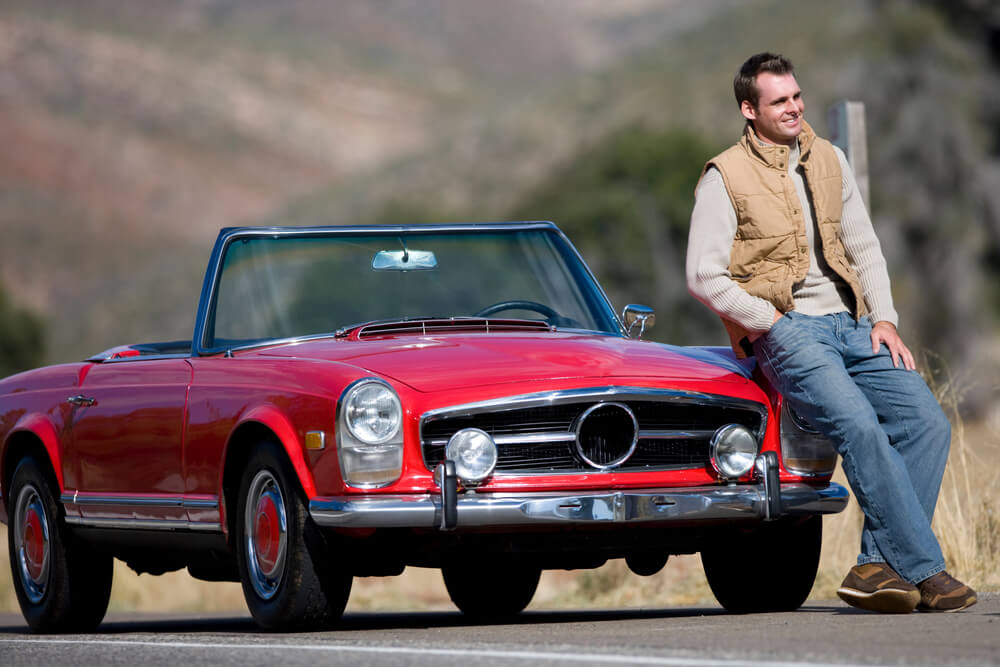
When you compare car insurance companies for classic
vehicles, you'll discover they work completely differently from standard auto policies. Classic
car insurance exists because collector vehicles don't behave like daily drivers. They appreciate
in value, sit in garages most of the year, and require specialized parts when repairs are needed.
The biggest mistake owners make is assuming a standard policy will
"just pay what it's worth," then discovering at total loss that Actual Cash Value can
leave them severely underpaid. A true collector policy spells out agreed or guaranteed value upfront,
protects against depreciation, and costs 30-50% less than regular insurance despite stricter usage and
storage requirements.
Key Insights
- Agreed value coverage pays a guaranteed, pre-negotiated amount if your car
is totaled, protecting you from the sting of depreciation.
- Collector policies typically cost 30-50% less than standard insurance
because limited mileage and secure storage significantly reduce risk.
- Specialty insurance provides access to rare OEM parts and expert restoration
shops that standard body shops simply cannot offer.
What Counts as a "Classic" or "Collector" Car?
Not every old car qualifies. Insurers use specific criteria, and age
alone doesn't determine eligibility. A 30-year-old daily driver with 200,000 miles won't
qualify.
Most collector programs start eligibility in the mid-teens to
mid-20s (15-25+ years), but final approval depends on condition, usage, storage, and documentation.
J.C. Taylor typically covers vehicles at least 19 years old. Hagerty bases eligibility on
collectibility plus usage and storage guidelines.
Insurers categorize collector vehicles into five main
types:
- Classic cars: Typically 20-40 years old,
maintained in original or restored condition, driven occasionally for shows and pleasure.
- Antique cars: Usually 45+ years old with
original or period-correct restoration preserving historical authenticity.
- Collector cars: Vehicles of particular interest
regardless of age due to limited production, racing heritage, or historical significance.
- Modified and custom cars: Classics with
non-original modifications like engine swaps or custom bodywork that increase value.
- Exotic cars: High-value performance vehicles
that may not be old but require specialty coverage due to replacement costs.
Insurers underwrite based on risk profile:
limited-use driving, secure storage, and collectible maintenance. Expect to provide photos, garaging
details, mileage intent, and value support.
7 Important Differences Between Classic and Regular Car Insurance
1. Agreed Value vs Actual Cash Value
Regular insurance uses actual cash value (ACV), which factors in
depreciation. Classic car insurance uses agreed value. You and the insurer agree on value upfront
based on appraisals and market comparables. If totaled, you receive the full agreed amount.
A restored classic on standard ACV policy might be valued using
depreciation-based comps that ignore restoration investment, while an agreed-value collector policy
pays the pre-agreed amount.
Agreed value is critical for appreciating
vehicles because it removes uncertainty at claim time. Instead of negotiating depreciation after a
loss, the insurer and owner pre-establish value based on condition, documentation, and current
collector market data. During appraisal, we review photographs, restoration records, comparable
sales, and conduct inspections to ensure agreed value accurately reflects true replacement cost.
2. Usage Restrictions and Mileage Caps
Regular car insurance has no mileage
restrictions. Classic car insurance includes strict limitations, such as:
- Annual mileage caps (1,000-5,000 miles)
- Restrictions on daily driving
- Requirements for another vehicle for regular use
- Limitations on commercial use
Mileage plans vary widely. Some offer 2,500, 5,000, or 7,500 miles
per year tiers. Others emphasize "not a daily driver" without hard caps for pleasure use,
but still restrict commuting. Collector policies cost less than standard policies for comparable
values because usage is lower and storage is controlled.
3. Storage and Security Requirements
Regular insurance has no storage requirements. Classic car insurance
mandates an enclosed garage or storage facility when not in use, alarm systems for high-value
vehicles, and proof of secure location.
Storage requirements exist because theft, vandalism, weather loss,
and damage risk drop dramatically when a collector vehicle is kept in a locked, enclosed garage. If
loss happens while stored contrary to policy requirements, you risk coverage complications or denial.
Treat storage and usage rules like warranties.
4. Access to Specialty Repair Shops and Parts
Regular insurance processes claims through standard body shops using
readily available aftermarket or OEM parts. Classic car insurance provides access to specialty repair
shops experienced with classic vehicles, coverage for hard-to-find OEM or NOS (new old stock) parts,
allowances for custom fabrication when parts don't exist, and higher labor rates for specialized
mechanics.
5. Premium Differences and How Pricing Works
Regular insurance prices are based on vehicle value, driver age,
location, driving record, and high mileage. Classic car insurance prices are based on agreed value,
limited mileage, secure storage, and collector status.
Cost comparison:
- Classic car insurance: $200-$1,000 annually,
depending on vehicle value and coverage.
- Regular auto insurance: $1,000-$4,000+ per year
for everyday vehicles with standard coverage.
- Savings potential: Classic policies can cost
30-50% less with similar liability limits.
Why collector policies cost less:
- Lower mileage: Reduced
annual mileage compared to daily drivers.
- Limited-risk usage: No commuting or daily
errands means fewer accident opportunities.
- Secure storage: Garaged vehicles face lower
theft, vandalism, and weather damage risks.
- Selective ownership: Owners are careful about
who drives the vehicle and where it's kept.
- Important note: Savings only apply if owners
follow program rules.
6. Eligibility Rules for Drivers
Regular insurance covers any licensed driver regardless of age
(though young drivers pay more). Classic car insurance requires a minimum age (typically 25+), a clean
driving record, and may exclude drivers with recent DUIs or major violations. Some require proof of
regular-use vehicle ownership.
7. Coverage for Appreciation and Modifications
Regular insurance doesn't cover appreciation. Modified vehicles
may be underinsured if modifications aren't declared.
What classic car policies cover:
- Value increases: Agreed value increases as
market value rises.
- Documented modifications: Coverage for engine
swaps, custom bodywork, and upgrades.
- Spare parts: Protection for NOS parts,
restoration parts.
- Tools and equipment: Coverage for specialized
maintenance equipment.
Modifications and restorations don't just
add cost. They often add long-term value, which is why they must be documented and insured
correctly.
Donald W. OsborneA.S.A.,
Accredited Senior Appraiserclassic & exotic vehicle
consultant
Osborne adds, "Specialty insurers work with appraisers and
restoration shops to factor upgrades, custom fabrication, and period-correct improvements into the
agreed value, then revisit that value as the vehicle evolves. Without that process, owners risk being
reimbursed only for a stock version of the car."
When Regular Car Insurance Might Still Be Enough
Not every older vehicle needs classic car insurance. Regular
coverage remains appropriate in these situations:
- Daily drivers: If you drive your vehicle daily,
exceed typical mileage caps, use it for commuting, or run errands regularly.
- Vehicles without collectible value: A
20-year-old Honda Accord in average condition lacks the collectible value or appreciation potential
that justifies specialty coverage.
- Storage limitations: If you lack enclosed garage
space, park on the street, or can't meet secure storage requirements.
- Transportation-focused use: If the
vehicle's market value is best represented by typical used-car comps (not collector comps), or
it functions as transportation first rather than a collectible.
The bottom line: If it functions as your primary
transportation, insure it as transportation.
How to Decide Between Classic and Standard Coverage
Use this assessment to determine which coverage fits your situation:
|
Question
|
Classic Car Insurance
|
Regular Insurance
|
|
Do you drive fewer than 5,000 miles per year?
|
✓
|
|
|
Do you have another vehicle for daily transportation?
|
✓
|
|
|
Is your vehicle increasing or holding its value?
|
✓
|
|
|
Can you store it in an enclosed, secure location?
|
✓
|
|
|
Are you 25+ with a clean driving record?
|
✓
|
|
|
Would you use specialized parts for repairs?
|
✓
|
|
If you answered yes to most questions, classic car insurance
offers better protection at a lower cost.
Questions to Ask Potential Classic Car Insurers
- What is your process for determining agreed value?
- What are your mileage restrictions?
- Do you have storage requirements?
- How
do you handle claims for hard-to-find parts?
- Do you cover spare parts, tools, and memorabilia?
- Can I adjust my agreed value as the market changes?
Most important question: Is this policy true agreed or
guaranteed value that pays the full amount in a total loss, or is it stated value or ACV language that can pay
less?
Pro tip: Get the settlement basis in writing and confirm how
often you can update the value.
Comparing Classic Car Insurance Providers
When comparing quotes, request identical liability limits across both types.
Compare how each handles total loss scenarios, appreciation coverage, and mileage restrictions.
|
Provider
|
Key Features
|
Best For
|
|
Hagerty
|
Guaranteed value coverage, flexible usage, no fixed mileage caps for pleasure driving
|
Collectors who drive frequently to shows and events
|
|
J.C. Taylor
|
Agreed value coverage, specializes in antiques, muscle cars, hot rods
|
Traditional collectors, vintage vehicle owners
|
|
American Collectors Insurance
|
Agreed value policies, collector-focused support
|
Classic car enthusiasts seeking personalized service
|
|
Grundy Insurance
|
Agreed value coverage, specialty vehicle program
|
Multi-vehicle collectors
|
Bottom Line: Classic Car Insurance vs Regular Auto Coverage
Classic cars are emotional investments with values tied to collector demand and
restoration quality, not depreciation schedules. The biggest risk of using regular insurance is discovering at
total loss that the insurer settles on ACV or stated-value limits rather than the collector value you expected.
Match the policy to how the vehicle is valued and used to avoid this expensive
surprise. Compare classic car insurance quotes
from specialty insurers to find coverage that protects both your vehicle's current value and its future
appreciation.
Classic car insurance typically costs $200-600 annually for vehicles valued at
$10,000-50,000, often 30-50% less than regular insurance due to limited mileage and careful ownership.
No. Classic car policies prohibit daily use and commuting. You must have another
vehicle for regular transportation.
With agreed value coverage, you can request periodic reappraisals and increase
your coverage amount as your vehicle appreciates.
Most insurers require appraisals for vehicles valued above $30,000-50,000.
Lower-value classics may only need photos and condition descriptions.
Yes. Classic car insurers specialize in covering modifications. You'll need
documentation of work performed and current market value reflecting the modifications.