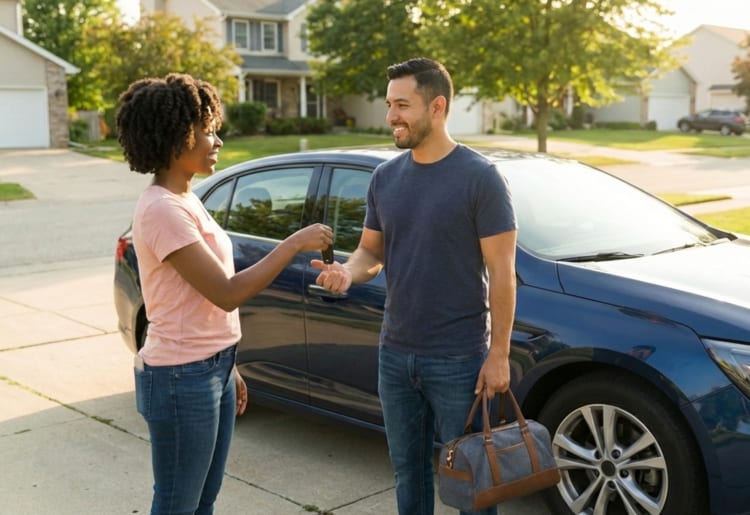
Lending your car might feel like a harmless favor, but a single crash
can turn it into a very expensive decision. In the U.S., an estimated 6 to 7
million police-reported crashes occur every year, and even minor fender-benders can result in
thousands of dollars in repair and medical bills.
When a friend or family member borrows your car, they're
effectively borrowing your insurance policy too. Before handing over your keys, you need to know
what's covered, when borrowers should be listed on your policy, and when it's time to compare car insurance
companies for better liability protection.
Key Insights
- If someone borrows your car with permission and causes an accident, your
policy pays first, and the claim goes on your record.
- Policyholders often see premiums jump 20-30% after a permissive driver causes
an accident, even though they weren't behind the wheel.
- Your liability limits determine maximum protection.
How Permissive Use Actually Works
Most auto insurance policies include "permissive use"
coverage, which extends protection to anyone driving your car with your permission.
- When you lend your car, your insurance becomes the primary
coverage: The borrower's personal insurance (if they have any) only provides secondary
coverage if damages exceed your policy limits. This means your deductible applies, your claim history
is affected, and your rates will likely increase.
- Permission is the keyword: If someone takes your
car without asking, that's theft, not permissive use. However, the line can blur with frequent
borrowers. If you regularly let your roommate use your car and they take it one day without
specifically asking, insurers might consider that implied permission based on the established pattern.
I handled a claim where a woman let her boyfriend borrow her car
"just for the weekend." He caused a serious accident, and the insurer later discovered
he'd been using the car weekly for months. The claim was paid, but her policy was non-renewed, and
her premiums nearly doubled afterward.
Many drivers don't realize that allowing
someone else to drive their vehicle means their own policy is exposed to risk. Understanding
permissive use rules before an accident happens is critical to avoiding unexpected financial
consequences
Loretta WortersVice President
of Media RelationsInsurance Information Institute
9 Things to Check Before You Hand Over Your Car Keys
1. Who Your Policy Automatically Covers
Standard auto insurance typically covers:
- Occasional permissive drivers (friends borrowing a car for specific errands)
- Household members listed on your policy
- Spouses or domestic partners in your household
Standard auto insurance typically doesn't cover:
- Business use (deliveries, rideshare)
- Drivers you've specifically excluded
- Anyone using your car without permission
- Regular drivers not listed on your policy
- Drivers with suspended or revoked licenses
Pro tip: Call your insurer before lending your car to
prevent a denied claim later.
2. When Someone Should Be Listed as a Driver on Your Policy
When Occasional Use Becomes Regular Use
From a claims perspective, "regular use" usually means
predictable access. If someone drives your car more than once a month, has their own set of keys, or
uses it for work or weekends, insurers expect them to be listed.
Unlisted or excluded drivers create some of
the most complicated claims situations. Policyholders should never assume occasional use won't
matter. Claims investigations look closely at driving patterns,
Mark FriedlanderDirector of Corporate
CommunicationsInsurance Information Institute
3. How Often and How Long They'll Be Using the Car
Add other drivers to your policy if they:
- Drive your car more than once a month
- Borrow it for more than 2-3 weeks at a time
- Have regular, predictable access (every weekend, work commutes)
- Live in your household
I've seen insurers go back and re-rate policies or deny coverage
once they discover patterns like weekly weekend use or extended borrowing periods during claims
investigations. What starts as "occasional help" quickly becomes regular use that
should've been disclosed.
4. What Happens If They Cause an At-Fault Accident
Here's the claim process when a permissive driver
causes a car accident.
- Your insurance pays first (primary coverage)
- You pay your deductible
- The claim goes on your insurance record
- Your rates likely increase at renewal (even though you weren't driving)
- If damages exceed your policy limits, the driver's insurance (if they have any) may provide
secondary coverage
- If damages still exceed both policies, you could be personally liable
According to The Zebra, policyholders see a rate increase of up to 50% following an at-fault
accident claim, regardless of who was driving.
One policyholder lent her car to a cousin, who caused a moderate
accident. Her rates increased by nearly $1,200 annually for three years, she lost accident forgiveness,
and she had to pay the deductible despite never driving the car herself. That's a tough lesson
I've seen repeated many times.
5. What Happens If They're Uninsured or Underinsured Themselves
If the borrower doesn't have their own insurance, your policy is
the only coverage available. If damages exceed your liability limits, there's no secondary
coverage, and you could be personally sued for the remaining amount.
Example: Your liability coverage is
$100,000/$300,000. Your uninsured friend borrows your car and causes a serious accident with $500,000 in
damages. Your policy pays the first $100,000. You could be personally sued for the remaining $400,000.
Someone without insurance is one of the riskiest people to lend your
car to. If a friend or family member needs to borrow your car and doesn't have insurance, the
safest move is to say no or require them to get non-owner insurance first.
6. Lending a Car to Someone with a Poor Driving Record
If a borrower has a suspended license, DUI history, or multiple recent
violations, insurers may deny the claim outright, especially if they determine you knew or should have
known about the risk. Even when claims are paid, policyholders often face non-renewals or forced driver
exclusions afterward.
7. How Deductibles and Liability Limits Apply in Borrowed-Car
Scenarios
Your limits apply, not theirs. Your liability limits determine maximum
coverage, your deductible applies to physical damage claims, and your coverage types determine what's covered (if you only have liability, collision
damage isn't covered, regardless of who's driving).
Example: You have $100,000 liability coverage and a
$1,000 deductible. Your friend borrows the car and causes $150,000 in damages. Your insurance pays
$100,000, you pay your $1,000 deductible for damage to your car, and you (or your friend) are personally
responsible for the remaining $50,000.
If you regularly lend your car, consider two adjustments: increase
your liability limits for better protection, and potentially adjust your deductible based on
your risk tolerance. The difference in premium between $100,000/$300,000 and $250,000/$500,000 coverage
is often just $10-20 per month.
8. Lending Your Car for Business, Deliveries, or Rideshare
Personal auto insurance doesn't cover delivery driving (DoorDash,
Uber Eats, Amazon Flex), rideshare driving (Uber, Lyft), or any commercial activities.
When insurers discover a vehicle was being used for delivery or
rideshare, claims are often denied in full, even if it was "just one trip." The policyholder
is then personally responsible for all damages, injuries, and legal costs.
If someone wants to borrow your car for commercial purposes, they need
commercial auto insurance, rideshare insurance
for Uber or Lyft, or to use their own vehicle with proper coverage. Never assume "just one
delivery" is fine. Insurance exclusions don't care about frequency.
9. What Happens If They Lend Your Car Again Without Your Permission
"Sub-permissive use" (when your friend lends your car to
someone else) is often NOT covered. If you lend your car to Friend A and they let Friend B drive it,
your insurance may deny coverage because you only permitted Friend A.
When you lend your car, be explicit that only that specific person can
drive it. A text message creates a record. If your friend needs to let someone else drive, they should
contact you first.
Bottom Line on Lending Your Car
Before lending your car, remember this: you're lending your
insurance, your deductible, and your future premiums. Verify who's driving, confirm they're
covered, and make sure your liability limits can protect you if something goes wrong. A moment of
caution beats years of higher premiums.
If you regularly share your vehicle, compare auto
insurance policies to ensure you have adequate liability coverage. Adding frequent drivers to your
policy costs less than dealing with a denied claim.
Methodology
- Expert review: Joey Haddad, licensed insurance
adjuster (FL, TX, GA, LA, SC, NC, MI, AL, NM, WV) with 15+ years of experience, reviewed all content
for accuracy. Additional insights from Loretta Worters (VP of Media Relations, Insurance Information
Institute) and Mark Friedlander (Director of Corporate Communications, Insurance Information
Institute).
- Sources: Insurance Information Institute, The
Zebra, National Association of Insurance Commissioners, and NHTSA Crash Report Sampling System.
- Important: Insurance coverage varies by policy and
state. This article provides educational information only and doesn't constitute insurance or
legal advice. Always review your specific policy and consult with licensed insurance professionals.
Frequently Asked Questions
1. Does my insurance cover my teenager's friends who
drive my car?
Yes, if your teenager has your permission to lend the car to their
friends, it's typically covered under permissive use. However, your rates will increase if the
friend causes an accident, and you're responsible for the deductible.
2. What happens if someone borrows my car and doesn't
have a license?
If they're driving with a suspended, revoked, or no license, your
insurer can deny the claim entirely. You could be held personally liable for all damages.
3. Am I liable if someone gets hurt in my car when someone
else is driving?
Yes. Your liability coverage applies, meaning your policy pays for
injuries up to your limits. If injuries exceed your limits, you could be personally sued for the
remaining amount.