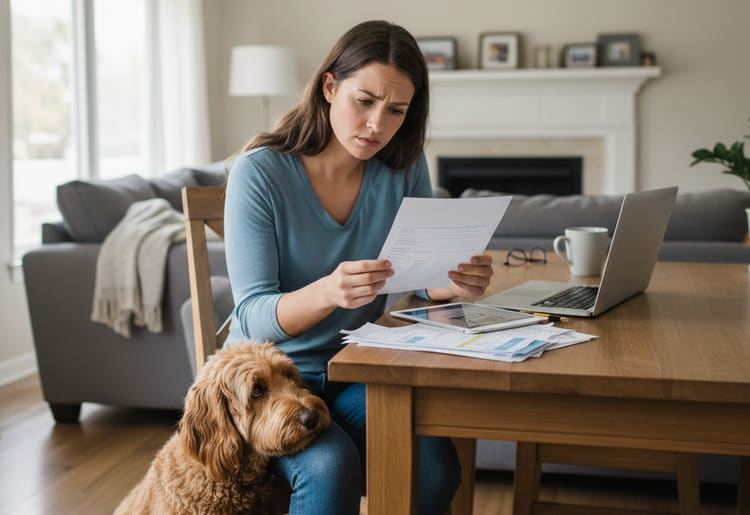
Denied a Pet Insurance Claim?
Here's How to Appeal (Step-by-Step)
Denied a Pet Insurance Claim? Here's How to Appeal (Step-by-Step)
Got a denied pet insurance claim? Don't give up. Most denials can be
reversed by writing a formal appeal letter within 30-60 days.
Written by
October 23, 2025
Getting your pet insurance claim denied can be frustrating and financially
stressful.
However, many denials can be successfully overturned with proper
documentation and a clear understanding of your policy.
"Claim denials are more common than you know, especially for pets
with pre-existing conditions," says Dr. Loke Jin Wong, Associate Veterinarian at Greenfield Veterinary Hospital.
"If you receive a denial letter, take a deep breath. I've
personally helped owners get appeals approved and reimbursed for hundreds of dollars," reassures
Dr. Wong.
This guide walks you through why claims get denied, how to build a
strong appeal, and when to escalate beyond your insurance company. Reviewing our best pet insurance companies can help
you choose a provider with transparent claims processes.
Key Insights
Pre-existing conditions, missing paperwork, or treatments outside your
coverage cause most denials, but you can often reverse them with the right documentation.
You have 30-60 days to appeal with a formal letter, complete vet records, and
proof that directly addresses why your claim was rejected.
If your insurance company denies your appeal, your state insurance department
can review your case and help resolve the dispute.
Common Reasons Pet Insurance Claims Get Denied
Understanding why insurers deny claims helps you avoid future
rejections and build stronger appeals. Insurance companies review every claim against your policy terms,
medical records, and coverage limitations.
Pre-Existing Conditions
Pre-existing conditions are the
most common reason for claim denials. Any illness, injury, or symptom your pet showed before coverage
began is permanently excluded.
"Insurance companies have pre-existing condition clauses to
prevent abuse of their policies," explains Dr. Wong.
He adds, "Determining coverage can come down to fine details. For
example, not all diarrhea episodes in a pet with IBD are directly related to IBD flare-ups." Common
conditions with broad denial patterns include allergies and GI diseases.
Incomplete or Missing Documentation
Claims without complete medical records, itemized invoices, or
required forms are routinely denied. Insurance companies need detailed documentation showing diagnosis,
treatment plan, and costs.
"Give your veterinarian time to finish records before submitting
claims. A prematurely submitted claim without finished diagnostics will come back denied. Another common
pitfall is when owners jump from vet to vet—this makes submitting proper claims more difficult,"
advises Dr. Wong.
Treatment Not Covered by Your Policy
Many pet owners don't fully understand their policy
exclusions until they file a claim. Wellness care, pre-existing conditions,
cosmetic procedures, and certain hereditary conditions are typically excluded.
"Certain policies have fine print that can confuse owners,"
notes Dr. Wong.
"From the difference between urgent care versus emergency room
visits, to what preventative care covers, it's crucial to know what you're signing
up for," warns Dr. Wong. Insurance policies can range from under 10 to 20-plus pages.
Claim Filed Outside Time Limits
Most pet insurance companies require claims within 90 to 180 days
after treatment. Late claims are automatically denied unless you prove a valid reason for the delay.
Waiting Periods Not Met
Standard pet insurance waiting periods range from
2-14 days for accidents and 14-30 days for illnesses. Claims during these periods are denied even if the
policy was active.
"The issue owners face is if their pet needs emergency surgeries
with extended ER stays that rack up bills. If owners don't have savings, waiting periods cause
stress as ERs want immediate payment," explains Dr. Wong. He recommends looking into payment plans
like CareCredit or ScratchPay beforehand.
Step-by-Step: How to Appeal a Denied Pet Insurance Claim
A systematic approach to your appeal increases your chances of
success. Insurance companies expect specific information and documentation to reconsider denied claims.
Step 1: Read the Denial Letter Carefully
Your denial letter explains exactly why your claim was rejected and
outlines your appeal rights. Look for the specific policy provision cited, the appeal deadline, and any
additional documentation requested.
Common denial reasons include "treatment for pre-existing
condition," "services not covered under policy," or "insufficient
documentation." Understanding the exact reason helps you address it directly.
Step 2: Gather Supporting Documentation
Build a complete file containing all evidence supporting your claim.
If appealing a pre-existing condition denial, gather records proving your pet showed no symptoms before
coverage began.
Essential documents for your appeal:
Complete veterinary medical records for the condition in question
All invoices and receipts with detailed procedure codes
Your pet insurance policy certificate and declarations page
Any pre-enrollment veterinary exam records
Timeline of symptoms, diagnosis, and treatment
Veterinarian's letter supporting medical necessity
Photos or documentation showing your pet's condition
"It's important for vet professionals to differentiate
between pre-existing conditions and new conditions. If we don't differentiate in the assessment
section, we set owners up for claim denials," says Dr. Wong.
Step 3: Write a Formal Appeal Letter
Your appeal letter should be professional, factual, and directly
address the denial reason. State your policy number, claim number, denial date, and specific reason for
denial upfront.
Explain clearly why you believe the claim should be approved.
Reference specific policy language that supports your position. Attach all supporting documentation and
number your exhibits for easy reference.
Sample appeal letter structure:
[Your Name] [Address] [City, State ZIP] [Phone Number] [Email]
[Date]
[Insurance Company Name] Claims Appeals Department [Address] [City,
State ZIP]
Re: Appeal of Denied Claim Policy Number: [Your Policy Number] Claim
Number: [Claim Number] Pet Name: [Pet's Name] Date of Denial: [Date]
Dear Claims Review Team,
I am writing to formally appeal the denial of my claim dated [date]
for veterinary treatment of my [dog/cat], [pet's name]. Your denial letter stated the claim was
denied because [specific reason from denial letter].
I respectfully disagree with this decision for the following reasons:
[State your case clearly, referencing policy language and attached
documentation]
Attached you will find the following supporting documentation:
Exhibit A: [Description]
Exhibit B: [Description]
Exhibit C: [Description]
Based on this information, I request that you reconsider your denial
and approve this claim for reimbursement of [amount] according to my policy terms.
Please confirm receipt of this appeal and advise of the expected
timeframe for your review. I can be reached at [phone] or [email] if you need additional information.
Thank you for your time and consideration.
Sincerely, [Your Signature] [Your Printed Name]
Step 4: Submit Your Appeal Within the Deadline
Most pet insurance companies require appeals within 30-60 days of your
denial letter date. Submit your appeal via certified mail with return receipt requested, or through your
insurer's online portal.
Keep copies of everything you submit. Include the date sent, method of
delivery, and any confirmation numbers. Missing the deadline usually means forfeiting your right to
appeal.
Step 5: Follow Up Regularly
Insurance companies typically respond to appeals within 30-60 days,
though complex cases may take longer. Contact the claims department every 7-10 days to check your appeal
status.
Document every conversation, including date, time,
representative's name, and what was discussed. If your appeal takes longer than the stated
timeframe, ask for a supervisor and request a specific decision date.
What to Expect During the Insurance Company Appeal Process
Understanding the internal appeals process helps you set realistic
expectations. Most pet insurance companies have structured procedures designed to resolve disputes
without external intervention.
How Long Does the Appeal Review Take?
Standard appeal reviews take 30-60 days from receipt of your complete
appeal package. Complex cases involving medical records review may take longer. During the review, a
claims specialist examines your original claim, denial reason, appeal letter, and supporting
documentation.
What Are the Possible Appeal Outcomes?
Appeals result in three possible outcomes: full approval and payment
of your claim, partial approval with reduced reimbursement, or denial upheld with a detailed
explanation. If denied, you receive a final denial letter explaining the decision and outlining your
rights to external review.
Can I Appeal More Than Once With My Insurance Company?
Many insurance companies offer multiple levels of internal appeals. If
your first-level appeal is denied, you may request a second-level review by a senior claims manager or
appeals committee.
Exhaust all internal appeals before seeking external review. State
regulators typically require proof that you've completed the company's internal process.
"Owners often lack the knowledge to know when they're being
treated unfairly. I strongly advise engaging your veterinarian to see if you're being dealt with
fairly. If an insurance company won't give you the time of day, reach out to the appropriate
regulatory organization," advises Dr. Wong.
When Your Insurance Company Won't Approve Your Appeal: External Help Options
If your insurance company's internal appeals fail, external
resources can help. State insurance regulators and consumer protection agencies have the authority to
investigate complaints and mediate disputes.
How to File a Complaint With Your State Insurance Department
Every state has an insurance department that regulates insurance
companies and investigates consumer complaints. File a complaint if your insurer violated policy terms,
failed to respond to your appeal, or engaged in unfair practices.
What to include in your state complaint:
Your contact information and policy details
Chronological timeline of claim submission and denials
Specific policy provisions you believe support your claim
All denial letters and appeal responses
Documentation of any communication breakdowns
Your desired resolution
State insurance departments typically provide online complaint forms
or accept written complaints by mail. The department contacts the insurance company and reviews both
sides of the dispute.
"For the average pet owner, it can be difficult to determine
whether an insurance company is treating you fairly," says Dr. Wong.
He adds, "If you really want appropriate help, reaching out to
your veterinary professional or even an attorney might be the way to go. My advice: if you think the
benefits outweigh the costs, then go for it."
Other Dispute Resolution Options
Mediation: Some states offer free mediation
services where a neutral third party helps you and the insurance company reach a non-binding
resolution.
Arbitration: A more formal process where an
arbitrator makes a binding decision after hearing both sides, though some policies require arbitration
for disputes over certain amounts.
Small claims court: For claims under your
state's limit (typically $5,000-$10,000), small claims court offers an accessible option without
requiring an attorney.
How to Avoid Future Claim Denials
Proactive steps reduce the likelihood of claim denials and simplify
the reimbursement process. Understanding your policy and maintaining proper documentation protects your
investment.
Request pre-approval for expensive treatments:
Many insurers offer pre-authorization for costly procedures like surgeries, which confirms coverage
before you commit to expensive care.
Review your policy certificate thoroughly: Pay
special attention to coverage limits, pet insurance deductibles,
reimbursement percentages, waiting periods, and exclusions before filing claims.
Maintain complete veterinary records: Keep copies
of all veterinary visits, diagnostic tests, and treatments to establish when conditions first
appeared.
Work closely with your veterinarian: Ask them to
document symptoms, diagnoses, and treatment timing thoroughly in medical records.
Submit claims promptly and completely: File claims
as soon as possible with all required documentation together, including itemized invoices with
procedure codes.
"Not many companies offer pre-approval services. I know Trupanion
works with certain vets for quick direct reimbursement. Something I do with my clients is plan
procedures, like mass removals, before we do pre-op bloodwork. I have owners call their insurance to see
if procedures are covered," notes Dr. Wong.
Bottom Line: How to Appeal a Denied Pet Insurance Claim
Denied pet insurance claims are frustrating but often reversible when
you understand the appeals process and provide thorough documentation. The key to successful appeals is
addressing the specific denial reason with clear evidence, submitting all required documents within
deadlines, and following up persistently.
"Many owners get frustrated when their claims are denied. Please
don't take this out on your friendly veterinarians; they're on your side," says Dr. Wong.
It's always important to secure pet insurance and, in addition, save for emergencies like denied
claims.
If your insurance company's internal appeals fail, state
insurance departments provide additional recourse through complaint investigations and mediation
services. Remember that thorough documentation and understanding your policy terms are your strongest
tools for avoiding future denials.
Methodology
Cost data sources: All veterinary cost estimates
in this article are based on real-world practice experience from Dr. Loke Jin Wong, Associate
Veterinarian at Greenfield Veterinary Hospital, who has extensive experience in both emergency and
general practice settings. Cost ranges reflect typical pricing observed in clinical practice and may
vary by geographic location and specific veterinary facility.
Insurance claims data: Appeal success rates and
common denial reasons are compiled from pet insurance industry reports, state insurance department
complaint data, and published insurer claim statistics.
Appeals process information: Procedural guidance
is based on standard insurance appeals practices, state insurance regulations, and published consumer
protection resources from state insurance departments.
Verification process: All claims and procedural
guidance in this article have been reviewed for accuracy based on typical pet insurance practices as
of 2025. Specific procedures may vary by insurance company and state.
Transparency note: BestMoney.com is committed to
providing accurate, unbiased information to help consumers understand their pet insurance rights and
navigate the claims appeals process effectively.
Frequently Asked Questions
1. How long does the pet insurance appeal process take?
Most pet insurance companies respond to appeals within 30-60 days of
receiving your complete appeal package, though complex cases may take longer. You can follow up every
7-10 days to check the status.
2. Can I appeal a claim denial more than once?
Yes, most insurance companies have multi-level appeal processes. If
your first appeal is denied, you can request a second-level review by a senior claims manager. After
exhausting internal appeals, you can file a complaint with your state insurance department.
3. What happens if my appeal is successful?
If your appeal is approved, the insurance company will process your
claim according to your policy terms and send reimbursement within 2-4 weeks. You'll receive an
explanation of benefits showing the covered amount, deductible, reimbursement percentage, and final
payment amount.
Written byAnna Baluch
Anna Baluch is an insurance and finance expert at BestMoney.com. She has
written for Forbes, Newsweek, Credit Karma, CNN, and many other top publications.